مخطط الموضوع

  • General information

    Cities & regions
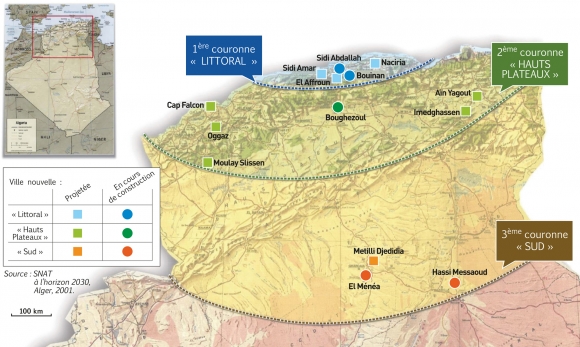
    Géographie de l'habitat


    Lecturer: Dr: GUECHI Imen

    Lecturer "A", Department of Architecture

    Email: guechi.imen@gmail.com


    Target group

    Public cible

    students in the 2nd year of the LMD bachelor's degree in town planning


    Pre-requisites

    Les pré-requis

    --The student should have a pre-knowledge of:
    1. Geography: A basic understanding of geography, including concepts related to cities, regions, urban landscapes, urbanization, demography, etc. 

    2. Urbanism: Knowledge of urbanism, theories and models of urban development, urban policies, urban planning, urban design, etc.

    3. Urban sociology: An understanding of social dynamics in cities, urban inequalities, cultural diversity, urban social movements, neighborhoods, gentrification, etc. 


    Pedagogical objectives of the course

    Objectifs pédagogiques du cours

    The main pedagogical objectives of the cities and regions module are:

    1. Understanding urban dynamics: The main objective is to develop an in-depth understanding of the processes and dynamics that shape cities and regions, including urbanization, population growth, changing urban landscapes, social and economic transformations, etc.

    2. Analyzing urban and regional issues: The module aims to analyze the issues and challenges facing cities and regions, such as urban management, land-use planning, social and spatial inequalities, access to basic services, the urban environment, mobility, etc.

    3. Understanding city-region interactions: The module can aim to analyze the complex relationships between cities and their surrounding regions, focusing on economic flows, transportation systems, social ties, interdependencies, etc. 

    4. Encouraging critical thinking: The module often aims to develop skills in critical analysis and conceptual thinking about urban and regional issues, encouraging students to challenge preconceptions, propose innovative solutions and assess the impacts of policies and interventions. 


    Informations 

    Informations

    Field: Geography and regional planning.

    Specialization: Regional planning.

    Course: Licence, semester 3

    Teaching unit : UE Fundamental UEF31

    Subject : Cities and Regions 

    Coefficient: 2

    Credits: 4

    -Total number of hours per semester : 22 h 30m 

    -Number of hours per week : 1h30


    - Content of the subject (Canevas)

    The course is structured around the following headings: 

    1.          Urban systems ''The notion of Territory, urban system''. 

    2.         Urban system components

    3.         Genesis and formation of the city

    4.         Elements of urban construction

    5.         The urban network

    6.         habitat types

    7.         elements of urban construction classification

    8.        City formation

    9.        the city and its rural hinterland

    10.      the region: concept and definitions

    11.      The region: structure and spatial dimension

    12.      Metropolization of space

    13.       conditions for regional change

    14.       Spatial distribution and urban hierarchy

    15.       Territorial attractiveness and competitiveness


    Evaluation method


    The course will be assessed by means of a test or homework assignment at the end of each lesson, in each learning unit and at the end of the course you'll find a test for the complete final assessment.

    Description of expected work

    -Students must take tests at the end of each learning unit, and at the end of each course they will find a test for final assessment.

    Bibliography

    1 - Pelletier J. et DelfanteCh, 2006, Villes et urbanisme dans le monde, éd. Armand colin, Paris, 199p.

    2 - Wackermann  G. 2002, Géographie urbaine, éd. ellipses, Lonrai, 239p.

    - Roncayolo  M. 2005, La ville et ses territoires, éd. Folio essais, Paris, 285p.

    3 - Bailly A. et Huriot. J-M. 1999, villes et croissances, théories, modèles, perspectives, Anthropos, Paris, 280 p.

    4 - Balzani B., Bertaux R. et Brot S. 2004, questions urbaines et politiques de la ville, l’Harmattan, 242 p.

    5 - Beaujeu-Garnier J. 1997, géographie urbaine, Armand Collin, 5e éd. Paris, 352 p.

    6 - Bloc-Duraffour P. 2000, les villes dans le monde, Armand Colin, « synthèse », Paris, 95 p.

    7 - Bonnet J. 1994, les grandes métropoles mondiales, Nathan Université, Paris

    8- Sassen, S. (1991). "The Global City: Strategic Site/New Frontier." American Studies, 32(2/3), 59-77.

    9- Harvey, D. (1989). "From Managerialism to Entrepreneurialism: The Transformation in Urban Governance in Late Capitalism." Geografiska Annaler. Series B, Human Geography, 71(1), 3-17.

    10- Florida, R. (2002). "The Economic Geography of Talent." Annals of the Association of American Geographers, 92(4), 743-755.

    11- Castells, M. (1989). "The Informational City: Information Technology, Economic Restructuring, and the Urban-Regional Process." Oxford: Basil Blackwell.

    12- Glaeser, E. L., & Gottlieb, J. D. (2008). "The Economics of Place-Making Policies." Brookings Papers on Economic Activity, 2008(1), 155-239

    13- Soja, E. (2000). "Postmetropolis: Critical Studies of Cities and Regions." Oxford: Blackwell Publishers.


  • Court N° 01: Urbanization

    Urbanization


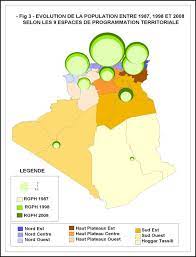
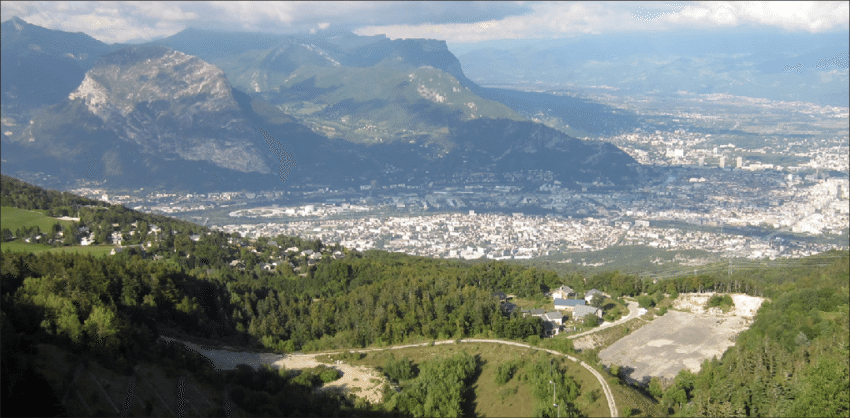
    Urbanization is a major structural phenomenon in emerging countries. These countries are experiencing very strong demographic growth, particularly in the "Africa-India-China" triangle, resulting in a proliferation of megacities. This urbanization goes hand in hand with sustained economic growth, enabling the development of an emerging middle class. Cities must therefore meet the new and growing needs of their populations with appropriate infrastructures (electricity, running drinking water, urban transport, housing) and services (education, waste treatment, cell phone and Internet networks), while containing the development of shantytowns.


  • Court No. 02: GENESIS AND FORMATION OF THE CITY (HISTORY)

    GENESIS AND FORMATION OF THE CITY (HISTORY)

    The city has always been an object of interest for thinkers of all kinds: philosophers, reformers, artists and scientists. This interest is quite understandable. The city is more than just a collective habitat. It is an object of fascination as a material reality symbolizing, throughout history, the power, culture and level of advancement of societies. The city is both the culmination of several millennia of evolution and the starting point for a series of socio-economic and cultural transformations that have marked humanity.


  • Court N°03: THE URBAN SYSTEM

     THE URBAN SYSTEM 

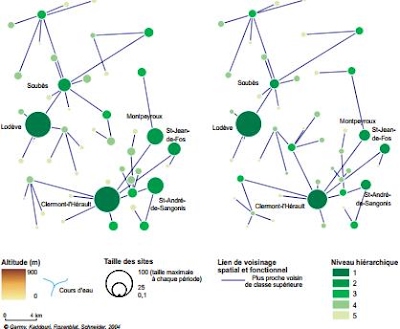
    Cities of different functions and sizes are integrated into regional and national exchange networks known as urban systems. Within these systems, people, goods and information are exchanged according to a hierarchy generally linked to size, since the larger the city, the greater the diversity of economic activities. Each city has an area of influence, and promotes contact and integration with its polarized region through supra-local economic circuits. The position of cities can change over time. 


  • Court N°04: URBAN STRUCTURE

     URBAN STRUCTURE 

    Today's city is the result of successive additions, shaped by the forces of history, which gave rise to the current spatial structure. The major transformations of the 19th century focused primarily on economic revitalization, to the detriment of the original footprint of the urban space, often erased by the relocation of industrial and craft activities to appropriate areas. In reality, the structure of the city took shape between the two world wars, and the upheavals of the 1960s and 1970s solidified the process already underway, with increasing specialization of urban space.

  • Court N°05: URBAN ARMATURE

    Court N°05: URBAN ARMATURE 

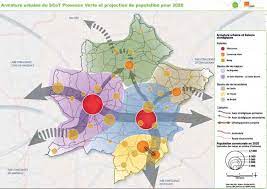
    The urban framework encompasses all hierarchical cities and their zones of influence within a given territory. Although closely linked to the notion of urban network, some prefer to use it to avoid confusion with the technical infrastructure of cities. However, geographers, urban planners and political decision-makers tend to steer clear of it because of its connotation of rigidity, preferring instead to turn to the concept of urban network, which evokes greater fluidity and dynamism. 

  • Court N°06: THE CITY AND ITS Hinterland

    THE CITY AND ITS Hinterland 


    In this course, we will explore the complex and interdependent relationship between cities and their hinterlands, highlighting the mutual impact they have on the development and functioning of territories.


    Cities and their hinterlands are inseparable entities that interact in different ways. The hinterland provides resources, natural, agricultural and industrial spaces, as well as a workforce that is often essential to urban activity. For their part, towns are economic, cultural and political centers that exert an influence on their rural environment.


  • COURSE N°07: SPATIAL APPROACH: METHODS AND THEORIES

    SPATIAL APPROACH: METHODS AND THEORIES

    The spatial approach is an interdisciplinary approach that emphasizes the spatial dimension of social and economic phenomena. The methods and theories of the spatial approach aim to examine how spatial factors influence the distribution, diffusion and interaction of phenomena in a geographical context. This includes the study of location patterns, transport and communication networks, the diffusion of innovations, the spatial organization of cities, regions and countries, and the interactions between man and the environment.